RSI (Relative Strength Index) in Trading – A Complete Beginner’s Guide
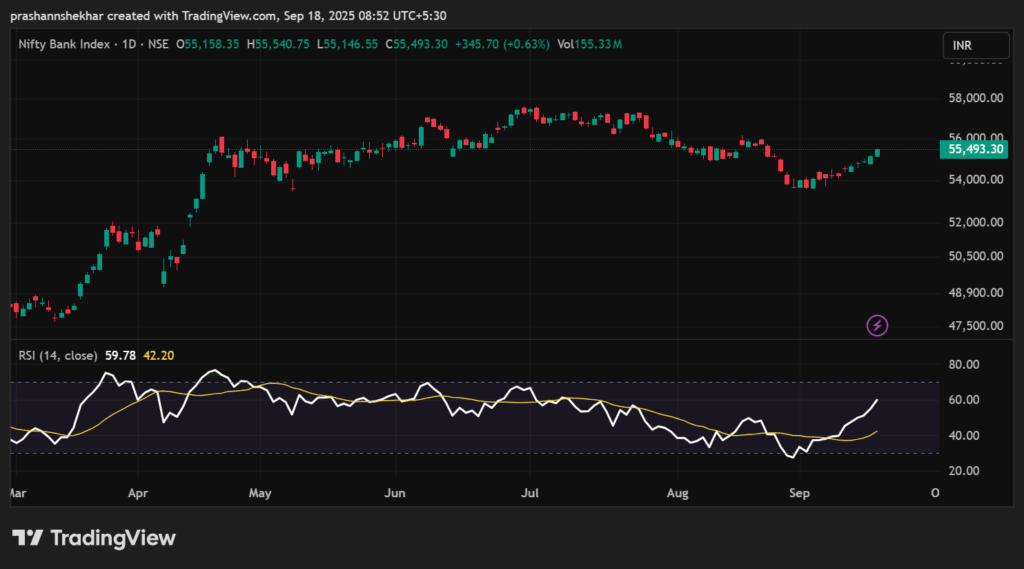
📌 Introduction When it comes to technical indicators, the Relative Strength Index (RSI) is one of the most widely used tools in trading. Introduced by J. Welles Wilder, RSI is a momentum oscillator that helps traders measure the speed and strength of price movements. Whether you are an intraday trader, swing trader, or investor, understanding RSI can give you an edge in spotting trend reversals and avoiding false entries. 🔹 What is RSI in Trading? RSI stands for Relative Strength Index. It is a momentum oscillator that ranges from 0 to 100 and is used to identify: 👉 In simple words: RSI tells you when a stock is running “too hot” or “too cold.” 🔹 RSI Formula (Simplified) RSI is calculated using the average gains and losses over a selected period (commonly 14 periods). RSI=100−1001+RSRSI = 100 – \frac{100}{1 + RS}RSI=100−1+RS100 Where RS = Average Gain ÷ Average Loss ⚡ Don’t worry—you don’t need to calculate it manually. Charting platforms like TradingView and ArthVed 9X tools plot RSI automatically. 🔹 How to Read RSI Levels 💡 Many traders also watch the RSI 60–40 range to identify bullish/bearish strength. 🔹 How to Use RSI in Trading 1. Overbought and Oversold Strategy ⚠️ But note: In strong trends, RSI can remain overbought/oversold for a long time. Always confirm with other indicators. 2. RSI Divergence Strategy RSI divergence occurs when the price and RSI move in opposite directions: 👉 Divergence is a powerful signal for early entry before the trend changes. 3. RSI with Moving Averages (Filter) Combine RSI with EMA or SMA for better accuracy. Example setup: 4. RSI Swing Rejection Strategy This advanced method looks for RSI to cross 30/70 levels and then reject back. Example: 🔹 Best RSI Settings for Traders 🔹 Advantages of RSI ✅ Easy to understand and apply.✅ Works across all timeframes (intraday, swing, positional).✅ Helps spot early trend reversals.✅ Powerful when combined with moving averages or candlestick patterns. 🔹 Limitations of RSI ❌ Can give false signals in strong trending markets.❌ Overbought/oversold does not always mean immediate reversal.❌ Best used with confirmation (trendlines, volume, support/resistance). 📊 Conclusion The Relative Strength Index (RSI) is one of the most reliable momentum indicators for traders. It helps you spot overbought and oversold conditions, identify divergences, and confirm trend strength. 👉 But remember: RSI should not be used in isolation. Combine it with Moving Averages, Support/Resistance, or Volume analysis for better results. 📌 Disclaimer: This blog is for educational purposes only. ArthVed 9X is not a SEBI-registered advisor. Please consult your financial advisor before making investment decisions.