What is NSE? Complete Guide for Indian Traders (2026)
If you are a beginner entering the Indian stock market, you will frequently hear the term NSE. Most stock trading in India happens on NSE, and almost all derivatives traders (Futures & Options) focus on NSE because of its liquidity and speed.
In this guide, you will understand what is NSE in India, how it works, what instruments are traded on NSE, and why it dominates Indian market trading volume.
Quick Answer: NSE (National Stock Exchange of India) is India’s largest electronic stock exchange where shares, futures, options, ETFs, and indices like Nifty 50 are traded through a computerized matching system.
What is NSE in India?
NSE stands for National Stock Exchange of India. It is one of the two major stock exchanges in India (the other being BSE). NSE was created to modernize Indian stock trading and bring transparency through electronic systems.
Earlier, trading in India was largely manual and based on physical trading floors. NSE introduced fully computerized trading, which improved efficiency, reduced manipulation, and increased trust in the market.
NSE Full Form and Meaning
The NSE full form is National Stock Exchange. The NSE meaning in practical terms is:
- A regulated platform where buyers and sellers meet
- Trades are matched electronically
- Prices are discovered based on demand and supply
- Settlement happens through clearing corporations under SEBI regulations
How NSE Works (Simple Explanation)
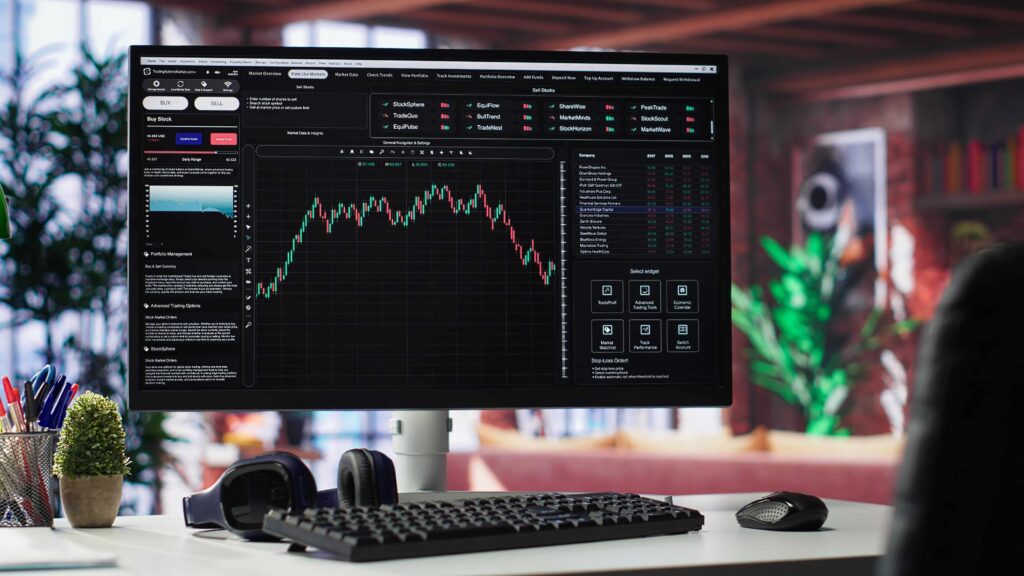
NSE works like a digital marketplace. When you place a buy order for a stock, you are competing with thousands of other buyers. When someone places a sell order at a matching price, the trade executes.
Key Point: NSE is not a broker
NSE does not deal directly with retail traders. You trade on NSE using a SEBI-registered broker such as Zerodha, Angel One, Upstox, Groww, etc.
NSE uses a system called Price-Time Priority. The best price gets priority, and if multiple orders exist at the same price, the earlier order gets executed first.
What Can You Trade on NSE?
NSE is not limited to stock buying and selling. It offers multiple segments for traders and investors.
- Equity (Stocks): Shares of companies like Reliance, TCS, Infosys
- Equity Derivatives: Futures & Options (Nifty, BankNifty, stock F&O)
- Currency Derivatives: USDINR, EURINR futures/options
- Debt Market: Bonds and government securities
- ETFs: Index ETFs, Gold ETFs
Why NSE is More Important for Traders Than BSE
Many beginners ask: why do traders prefer NSE over BSE? The answer is simple: liquidity.
1. Higher Liquidity
Liquidity means more buyers and sellers are available at all times. This creates smoother price movement and makes it easier to enter and exit trades.
2. Smaller Bid-Ask Spread
A tight spread means you lose less money to transaction cost. NSE generally has tighter spreads than BSE, especially in F&O.
3. Dominance in Futures & Options (F&O)
India’s derivatives market is heavily dominated by NSE. If you trade Nifty options or BankNifty options, you are trading on NSE.
NSE vs BSE: What is the Difference?
Both NSE and BSE are SEBI-regulated exchanges, but their structure and dominance differs.
- NSE Benchmark Index: Nifty 50
- BSE Benchmark Index: Sensex
- NSE Strength: Liquidity + Derivatives
- BSE Strength: Large number of listed companies + legacy exchange
Beginner Tip: If you are learning trading, focus on NSE instruments like Nifty 50 and liquid stocks. Avoid illiquid shares where entry is easy but exit becomes impossible.
What are NSE Indices? (Nifty 50 Explained)
NSE’s most popular index is Nifty 50. It represents the top 50 companies listed on NSE based on market capitalization and liquidity.
When people say “market is up today,” they usually mean Nifty is up. Nifty is also the most traded derivative instrument in India.
NSE Trading Hours in India
NSE trading hours are structured into sessions:
- Pre-market: 9:00 AM to 9:15 AM
- Normal market session: 9:15 AM to 3:30 PM
- Post-market: 3:40 PM to 4:00 PM
Most volatility happens in the first 15–30 minutes after 9:15 AM. Beginners should avoid trading in that zone until they understand price action.
👉 Read our free course lesson: Module 1 Lesson 2: NSE vs BSE Explained
Who Regulates NSE?
NSE is regulated by SEBI (Securities and Exchange Board of India). SEBI ensures that trading is fair, transparent, and free from manipulation.
NSE also works with clearing corporations and depositories like NSDL and CDSL to ensure smooth settlement of trades.
Why NSE Matters for Every Trader
If you are learning trading or investing, NSE matters because:
- Most stock price discovery happens on NSE
- Nifty 50 and BankNifty are NSE products
- NSE has India’s highest trading volume
- Liquidity is best for intraday and swing trading
📌 If you're serious about building a strong trading foundation, start with our free beginner module: Stock Market Basics (Module 1)
Frequently Asked Questions (FAQ)
What is NSE in India?
NSE (National Stock Exchange of India) is India’s largest electronic stock exchange where stocks, futures, options, ETFs, and currency contracts are traded.
Is NSE a government company?
NSE is not directly a government company. It is a regulated stock exchange overseen by SEBI and operates under strict rules.
Which is better: NSE or BSE?
Both are reliable and SEBI-regulated. However, NSE is preferred by active traders due to higher liquidity and tighter spreads, especially in derivatives trading.
Can I buy shares directly from NSE?
No. Retail investors cannot trade directly with NSE. You must use a SEBI-registered broker such as Zerodha, Angel One, Upstox, or Groww.